
In a world that constantly demands our attention and tests our limits, the ability to bounce back from adversity isn’t just a desirable trait—it’s an essential skill. Welcome to the journey of building mental resilience, a cornerstone of an effective everyday mental fitness routine. At Reconstruct Your Mind, we understand that true mental strength isn’t about avoiding challenges, but about developing the internal resources to navigate them with grace and determination. This comprehensive guide will serve as your blueprint to cultivating robust mental resilience, transforming how you respond to stress, setbacks, and change, and ultimately, leading a more fulfilling life.
Many people believe resilience is an inherent quality—you either have it or you don’t. However, scientific research, particularly in the fields of psychology and neuroscience, clearly shows that resilience is a muscle that can be strengthened through consistent practice and targeted strategies [1]. Just as you wouldn’t expect to run a marathon without training, you can’t expect to weather life’s storms without intentionally preparing your mind. This journey is about proactively engaging in practices that enhance your capacity to adapt, recover, and grow in the face of life’s inevitable ups and downs.
Our goal at Reconstruct Your Mind is to empower you to create sustainable habits that foster deep, lasting mental well-being. By integrating the principles of mental resilience into your daily life, you’ll not only survive challenges but truly thrive. Let’s delve into what mental resilience truly means, why it’s more crucial than ever, and how you can begin to forge your inner steel, day by day.
What Exactly is Mental Resilience?
At its core, mental resilience is the capacity to withstand, adapt to, and recover from stress, trauma, adversity, and significant life changes [2]. It’s not the absence of stress or pain, but rather the ability to effectively manage and learn from these experiences. Think of it like a sturdy tree: it bends with the wind but doesn’t break. When faced with a storm, the resilient individual might feel the impact, but they possess the internal mechanisms to regain balance, repair any damage, and emerge stronger.
Key characteristics of mentally resilient individuals often include:
- Adaptability: The ability to adjust to new conditions and situations quickly and effectively.
- Optimism: A general belief that good things will happen, even in the face of current difficulties. This isn’t naive positivity but a realistic hope.
- Problem-Solving Skills: The capacity to identify issues, generate solutions, and take decisive action.
- Self-Awareness: Understanding one’s own emotions, strengths, and weaknesses.
- Emotional Regulation: The skill to manage and respond to emotional experiences in a healthy and constructive way, rather than being overwhelmed by them.
- Strong Social Connections: Seeking and utilizing support from others, understanding the importance of community.
- Sense of Purpose: Having clear goals or values that provide meaning and direction, especially during tough times.
In today’s fast-paced world, where uncertainty often feels like the only constant, cultivating mental resilience is no longer a luxury—it’s a necessity for maintaining robust mental health and an everyday mental fitness routine. It empowers you to navigate personal struggles, professional pressures, and global uncertainties without succumbing to burnout or despair.
The Pillars of an Everyday Mental Fitness Routine for Resilience
Building mental resilience requires a holistic approach, addressing various aspects of your life. These interconnected pillars form the foundation of a robust mental fitness routine, each contributing to your overall ability to bounce back and thrive.
1. Mindfulness and Presence: Anchoring Yourself in the Now
While often discussed, the role of mindfulness in building resilience cannot be overstated. It’s the practice of bringing your full attention to the present moment, observing your thoughts, feelings, and bodily sensations without judgment [3]. For resilience, mindfulness helps by:
- Increasing Self-Awareness: By regularly checking in, you become more attuned to early signs of stress or emotional distress, allowing you to intervene before things escalate.
- Creating Space for Response: Instead of reacting impulsively to stressors, mindfulness helps you pause, observe, and choose a more constructive response. This “”space”” is crucial for emotional regulation.
- Reducing Rumination: It pulls you away from getting stuck in negative thought loops about the past or anxieties about the future, bringing you back to what is actionable now.
How to Integrate: Even 5-10 minutes of focused breathing meditation daily can make a significant difference. Pay attention to mundane tasks like eating or walking, engaging all your senses. This practice lays the groundwork for all other resilience-building efforts.
2. Cognitive Flexibility and Reframing: Shifting Your Perspective
Our thoughts profoundly influence our emotions and actions. Cognitive flexibility is the ability to adapt your thinking to new situations, consider different perspectives, and challenge unhelpful thought patterns [4]. When you can reframe a challenge, you’re not denying reality, but choosing a perspective that is more empowering or solution-oriented.
- Challenging Automatic Negative Thoughts (ANTs): Learn to identify thoughts that are overly critical, catastrophic, or defeatist. Ask yourself: Is this thought fact or opinion? Is there another way to look at this?
- Adopting a Growth Mindset: Instead of seeing setbacks as failures, view them as opportunities for learning and growth. This perspective shifts focus from what went wrong to what can be done differently next time.
- Practicing Gratitude: Regularly acknowledging the positive aspects of your life trains your brain to seek out good, even amidst difficulty. This doesn’t mean ignoring challenges, but balancing them with appreciation.
How to Integrate: Keep a gratitude journal, practice thought challenging (e.g., CBT techniques) when you find yourself spiraling, and intentionally seek out alternative explanations for events.
3. Emotional Regulation and Acceptance: Navigating Your Inner Landscape
Resilience isn’t about suppressing emotions; it’s about acknowledging and processing them constructively. Emotional regulation is the ability to influence which emotions you have, when you have them, and how you experience and express them [5]. This includes accepting uncomfortable emotions without letting them overwhelm you.
- Naming Emotions: Simply identifying and naming an emotion (e.g., “”I feel frustrated”” instead of “”I’m just overwhelmed””) can reduce its intensity and help you understand its root cause.
- Self-Compassion: Treat yourself with the same kindness and understanding you would offer a good friend, especially during difficult times. This reduces self-criticism and fosters emotional healing [6].
- Healthy Coping Mechanisms: Develop a toolkit of healthy ways to manage stress and difficult emotions, such as exercise, creative expression, talking to a friend, or spending time in nature, rather than maladaptive coping strategies like avoidance or substance abuse.
How to Integrate: Practice body scans to locate emotions, incorporate self-compassion breaks (e.g., “”This is a moment of suffering, suffering is a part of life, may I be kind to myself””), and identify 3-5 healthy coping strategies you can deploy when feeling overwhelmed.
4. Strong Social Connections: The Power of Community
Humans are inherently social beings, and our connections with others play a vital role in our mental health and resilience. A robust support system acts as a buffer against stress and provides invaluable resources during difficult times [7].
- Seeking Support: Knowing when and how to reach out to friends, family, or professional therapists for help.
- Offering Support: Contributing to others’ well-being strengthens your own sense of purpose and connection.
- Belonging: Feeling connected to a community or group fosters a sense of security and shared identity.
How to Integrate: Prioritize spending quality time with loved ones, join a club or group aligned with your interests, and practice active listening to strengthen your relationships. Don’t be afraid to ask for help when you need it.
5. Physical Well-being: The Mind-Body Connection
Your physical health is inextricably linked to your mental health. Neglecting one will inevitably impact the other. Prioritizing physical well-being is a non-negotiable component of any effective mental fitness routine for resilience [8].
- Regular Exercise: Physical activity reduces stress hormones, releases endorphins, and improves sleep quality. Even a short walk can clear your head.
- Nutritious Diet: Fueling your body with whole foods supports brain function and mood regulation. Avoid excessive sugar, processed foods, and caffeine.
- Adequate Sleep: Sleep is crucial for memory consolidation, emotional regulation, and overall cognitive function. Chronic sleep deprivation severely impairs resilience.
How to Integrate: Aim for at least 30 minutes of moderate exercise most days, prioritize whole foods, and establish a consistent sleep schedule, creating a relaxing bedtime routine.
6. Purpose and Meaning: A Guiding Compass
Having a sense of purpose provides direction and motivation, especially when facing adversity. It helps you see beyond immediate challenges and connect to something larger than yourself [9].
- Identifying Values: Understand what truly matters to you and align your actions with these core values.
- Setting Meaningful Goals: Pursue goals that resonate with your values and contribute to your sense of fulfillment.
- Contributing to Others: Volunteering, helping friends, or engaging in acts of kindness can boost your sense of purpose and well-being.
How to Integrate: Reflect on your core values and how they manifest in your life. Engage in activities that bring you a sense of meaning, whether it’s creative pursuits, community involvement, or learning new skills.
Practical Strategies: Your Daily Mental Fitness Blueprint for Resilience
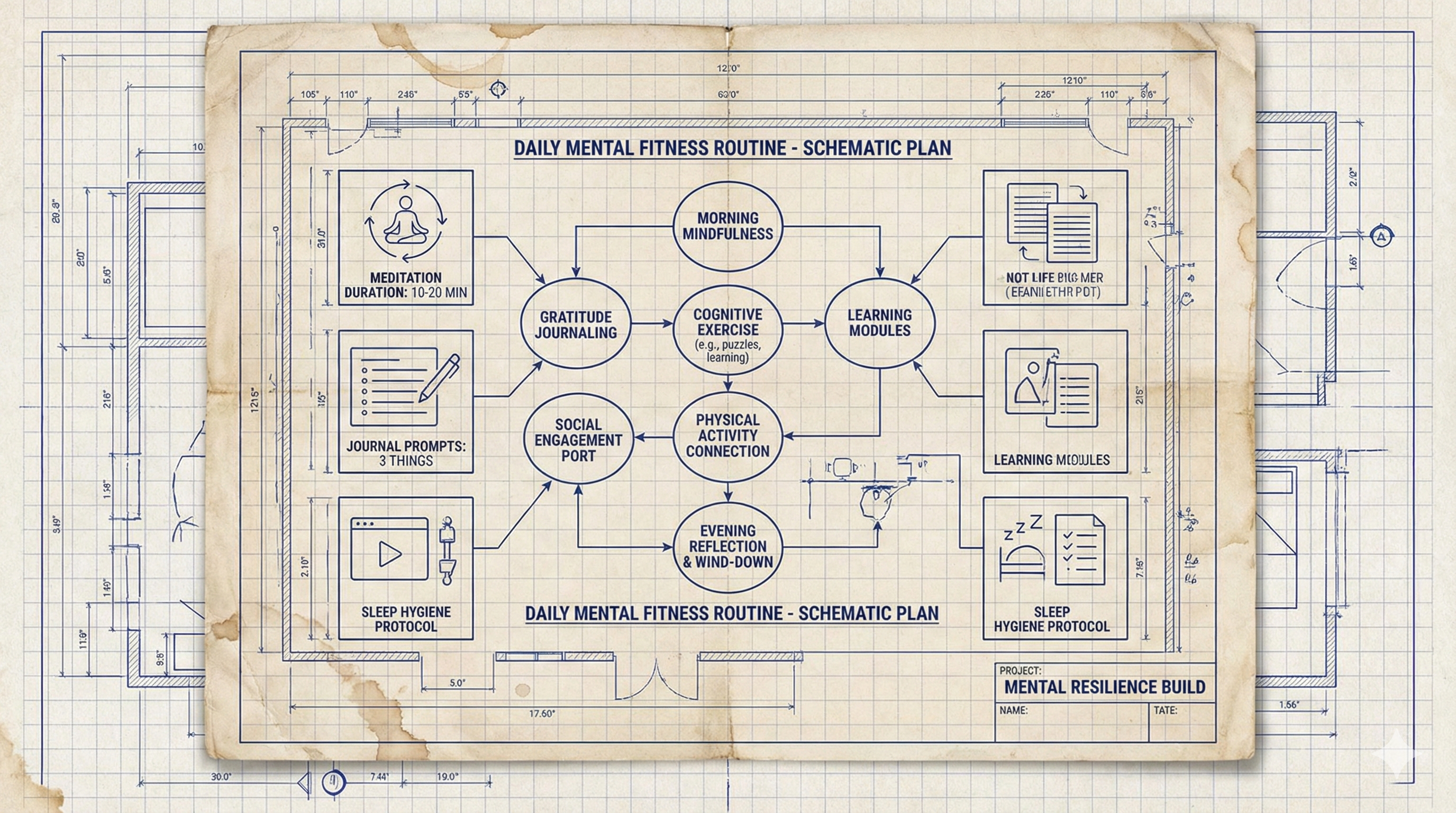
Building mental resilience isn’t about grand gestures; it’s about consistent, small actions integrated into your daily life. Here’s how you can weave these pillars into a sustainable everyday mental fitness routine:
The Intentional Morning Routine: Setting the Tone
How you start your day significantly influences your mental state. A resilient morning routine helps you begin with intention and calm, rather than reactivity.
- Mindful Awakening (5 minutes): Before reaching for your phone, take a few deep breaths. Notice the sensations of waking up. Set a simple intention for the day, e.g., “”Today, I will approach challenges with calm.””
- Gratitude Practice (5-10 minutes): Jot down 3-5 things you’re grateful for. This shifts your brain towards positive recognition.
- Movement & Fresh Air (15-30 minutes): A short walk, some gentle stretches, or a quick workout boosts energy, improves mood, and gets your blood flowing. If possible, do it outdoors to connect with nature.
- Nourishing Breakfast: Fuel your body with a balanced meal to sustain energy and focus.
Mid-day Check-ins: Recharging and Reframing
The middle of the day can bring new stressors. Regular check-ins help you stay grounded and prevent overwhelm.
- Mindful Pause (2-5 minutes): Take a “”micro-break.”” Step away from your desk, close your eyes, and focus on your breath. Notice any tension and consciously release it.
- Thought Challenging: If you find yourself in a negative thought spiral, consciously challenge those thoughts. “”What’s the evidence for this? Is there another explanation? What would I tell a friend in this situation?””
- Hydration & Movement: Drink water and take a brief walk to break up prolonged sitting.
Evening Wind-down: Processing and Preparing
A resilient evening routine helps you process the day’s events, relax, and prepare for restorative sleep.
- Reflective Journaling (10-15 minutes): Write about your day. What went well? What challenges did you face, and how did you navigate them? What did you learn? This fosters self-awareness and cognitive reframing.
- Digital Detox (30-60 minutes before bed): Step away from screens. The blue light and constant stimulation disrupt sleep.
- Relaxation Techniques: Practice progressive muscle relaxation, listen to calming music, or read a book.
- Sleep Hygiene: Ensure your bedroom is dark, quiet, and cool. Aim for 7-9 hours of quality sleep.
Integrating Reconstruct Your Mind Principles: Our platform is designed to help you track and integrate these practices seamlessly. Use our tools to set daily intentions, log your gratitude, track your mood, and build consistent habits. Consistency is the magic ingredient in building lasting mental resilience.
Overcoming Obstacles to Building Resilience
The path to greater mental resilience isn’t always smooth. You might encounter common obstacles:
- Lack of Time: Start small. Even 5 minutes of mindfulness is better than none. Over time, these small efforts compound.
- Lack of Motivation: Remind yourself of your “”why.”” What are the benefits of being more resilient in your life? Focus on progress, not perfection.
- Feeling Overwhelmed: Break down big goals into tiny, achievable steps. Don’t try to implement everything at once. Pick one or two strategies and master them before adding more.
- Negative Self-Talk: Be patient and kind to yourself. Challenge those inner critics. Resilience is a journey, not a destination, and setbacks are a part of learning.
- Old Habits: It takes conscious effort to form new habits. Be aware of your old patterns and gently redirect yourself.
Remember, every expert was once a beginner. The key is consistent effort and self-compassion. Celebrate your small victories and learn from your missteps.
The Long-Term Rewards: A Life of Unshakeable Mental Fitness
As you consistently implement these strategies, you’ll begin to notice profound shifts in your mental landscape. Building mental resilience isn’t just about surviving hard times; it’s about enhancing your everyday life in countless ways:
- Reduced Stress and Anxiety: You’ll develop better coping mechanisms, leading to a calmer, more centered daily experience.
- Improved Relationships: Your ability to regulate emotions and communicate effectively will strengthen your connections with others.
- Enhanced Decision-Making: With a clearer mind and greater emotional stability, you’ll make more thoughtful and effective decisions.
- Greater Sense of Purpose and Fulfillment: By aligning with your values and actively engaging in meaningful activities, you’ll experience deeper satisfaction.
- Increased Overall Well-being: A resilient mind contributes to a happier, healthier, and more engaged life, allowing you to flourish even in the face of uncertainty.
- Better Physical Health: Reduced stress has a direct positive impact on your immune system, cardiovascular health, and longevity [10].
Imagine facing a challenge not with dread, but with a quiet confidence, knowing you have the inner resources to navigate it. This is the promise of mental resilience—a life where you are the architect of your emotional responses and the master of your mental well-being.
Conclusion: Your Journey to a Reconstructed Mind Begins Now
Building unshakeable mental resilience is one of the most empowering journeys you can embark on. It transforms you from a passive recipient of life’s challenges into an active participant, capable of shaping your internal experience regardless of external circumstances. By embracing mindfulness, cultivating cognitive flexibility, mastering emotional regulation, nurturing social connections, prioritizing physical health, and living with purpose, you are systematically reconstructing your mind, one conscious habit at a time.
This isn’t a quick fix; it’s a lifelong commitment to your mental fitness. But with each intentional breath, each reframed thought, and each moment of connection, you are laying down stronger neural pathways, building a more robust inner fortress. Start small, stay consistent, and be patient with yourself. The tools and insights provided here are your starting point. Now, it’s time to put them into practice.
Ready to integrate these practices into your daily life and truly reconstruct your mind? Explore more resources and tools on our platform designed to support your journey to lasting mental fitness.
Frequently Asked Questions (FAQ)
A1: Building mental resilience is an ongoing process, not a destination. You can start seeing positive shifts in weeks with consistent daily practice of techniques like mindfulness and gratitude. However, deep-seated changes in your ability to cope and bounce back will evolve over months and years. It’s a continuous journey of learning and adaptation.
A2: While some people may have certain personality traits that predispose them to resilience, it is overwhelmingly a learned and developed skill. Research consistently shows that resilience can be cultivated through specific practices, strategies, and a supportive environment. It’s like a muscle that strengthens with consistent exercise.
A3: “”Toughness”” often implies suppression of emotions or a rigid inability to show vulnerability. Mental resilience, in contrast, involves acknowledging and processing emotions, adapting to change, and seeking support when needed. It’s about flexibility and growth, not just enduring pain. Resilient individuals understand that vulnerability can be a strength.
A4: Absolutely. Therapy, particularly cognitive-behavioral therapy (CBT), dialectical behavior therapy (DBT), and acceptance and commitment therapy (ACT), explicitly teaches skills for cognitive reframing, emotional regulation, and mindfulness—all crucial components of resilience. A therapist can provide personalized strategies and support to navigate specific challenges and build your resilience toolkit.
A5: Not at all! Resilience isn’t about perfection; it’s about your ability to recover and adapt. Having a bad day or missing a routine is a normal part of life. The resilient response is to acknowledge it, practice self-compassion, learn if there’s anything to learn, and gently get back on track the next day. It’s the overall pattern of bouncing back that defines resilience, not flawless execution.
A6: The best way to encourage resilience in others is to model it yourself. Also, provide a supportive and stable environment, teach problem-solving skills, encourage emotional expression, help them develop strong social connections, and foster a growth mindset where challenges are seen as opportunities for learning. Empower them to take age-appropriate risks and learn from their mistakes.
A7: Many apps can support your resilience journey. Mindfulness apps like Calm or Headspace are excellent for guided meditations. Journaling apps can help with gratitude and reflection. Of course, platforms like Reconstruct Your Mind are specifically designed to help you build and track your mental fitness routines, including resilience-building habits. The key is to find tools that you will use consistently.
References
- American Psychological Association. (n.d.). Resilience.
- Mayo Clinic. (2022, November 16). Resilience: Build skills to endure hardship.
- Mindful. (n.d.). What is Mindfulness?
- Dixon, R. A., & Bäckman, L. (2020). Cognitive Flexibility. In Encyclopedia of Gerontology and Population Aging. Springer, Cham.
- American Psychological Association. (n.d.). Emotion Regulation.
- Neff, K. (n.d.). Self-Compassion.
- Harvard Health Publishing. (2018, May 1). The health benefits of strong relationships.
- National Institute of Mental Health. (n.d.). Stress.
- Schnell, T. (2018). The Sources of Meaning and their Impact on Well-Being and Resilience. In International Journal of Existential Psychology and Psychotherapy, 7(1).
- American Heart Association. (n.d.). Stress and Heart Health.